The Jewish history of Sneek
The beginning
A small Jewish community arose in Sneek from the early 1700s. At first a handful, but as the number grew to about 20 people, a group bond was formed. Initially, part of a private home was used as a place of assembly. Later they were even able to purchase a house, the upstairs room of which was furnished as a synagogue. In 1823, land was acquired for the establishment of a cemetery.
From home synagogue to ‘real’ synagogue
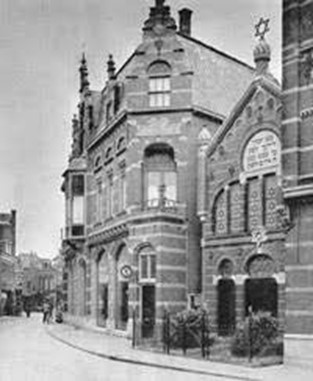
In 1836, the Jewish community in Sneek numbered 120 souls, from 20 families. Still a relatively small group, but the house we purchased did become too small. The plan was conceived to build a “real” synagogue. The plan was carried out, and on March 12, 1836, the new synagogue was consecrated.
The community remained small and it was difficult to cope financially . It is nevertheless noteworthy that many non-Jewish Snekers contributed financially to the construction of the synagogue, and the annual collection of the Armbestuur for the needy was allowed to be held among all Sneek residents.
In 1880, the synagogue on Wijde Burgstraat was extensively remodeled in Neomoor style by city architect Breunissen Troost.
A disappearing community
Twelve years later Sneek counted 141 Jews, after which the decline began. Many Jewish families left Sneek to live in places with larger Jewish communities.
The war marked the end of the Jewish community in Sneek. There were still 68 Jews “registered,” most of whom were deported and murdered. 25 Sneker Jews survived the war by going into hiding. A relatively large number for the Netherlands, in which the Sneek underground played a major role.
The synagogue was destroyed during the war and, after the war, re-establishment of the Jewish community in Sneek proved impossible. The returned community members were absorbed into the community of Leeuwarden.
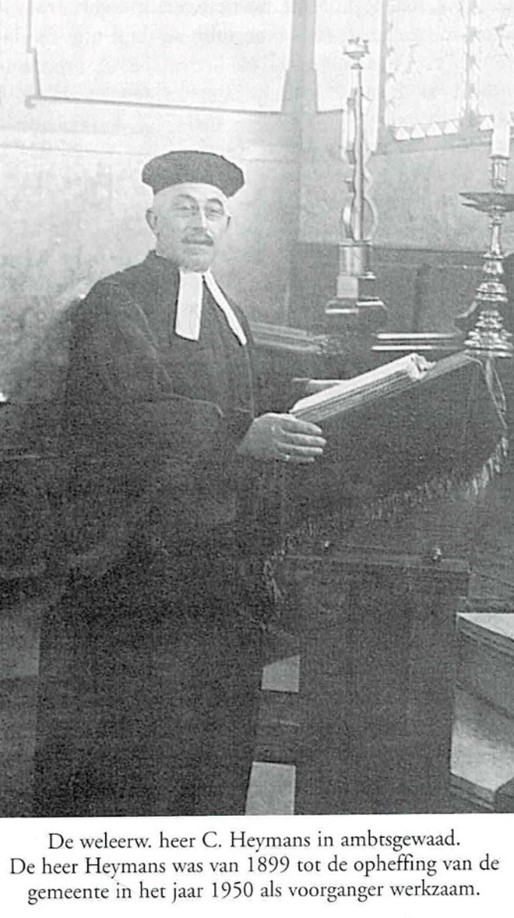
In 1949, what was left of the synagogue was torn down. A fabric store and warehouse took its place…. In 1950, the Jewish community of Sneek was dissolved. The number of Jews in Sneek today is back to what it was in the early 1700s: a handful.
Jewish monuments in Sneek
The new monument at the former synagogue is certainly not the only monument that commemorates Jewish Sneek.
“Struikelstenen”
Let’s start with the smallest monuments that can be found in various places in Sneek: the Struikelstenen. In Frisian: Stroffelstiennen. The German sculptor-artist Gunter Demnig devised this Stolpersteine-project. The stones, placed in front of houses where Jewish Snekers once lived, state the name, year of birth and year and place of death of the occupant. That place of death was in most cases a concentration camp where these Jewish citizens of Sneek were murdered.
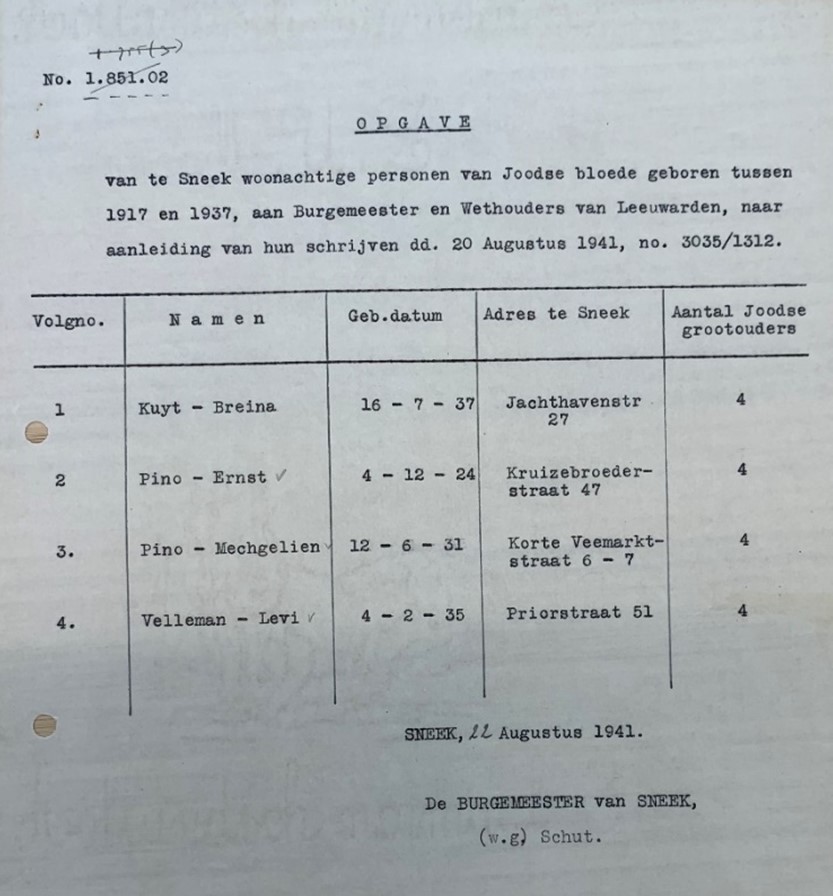
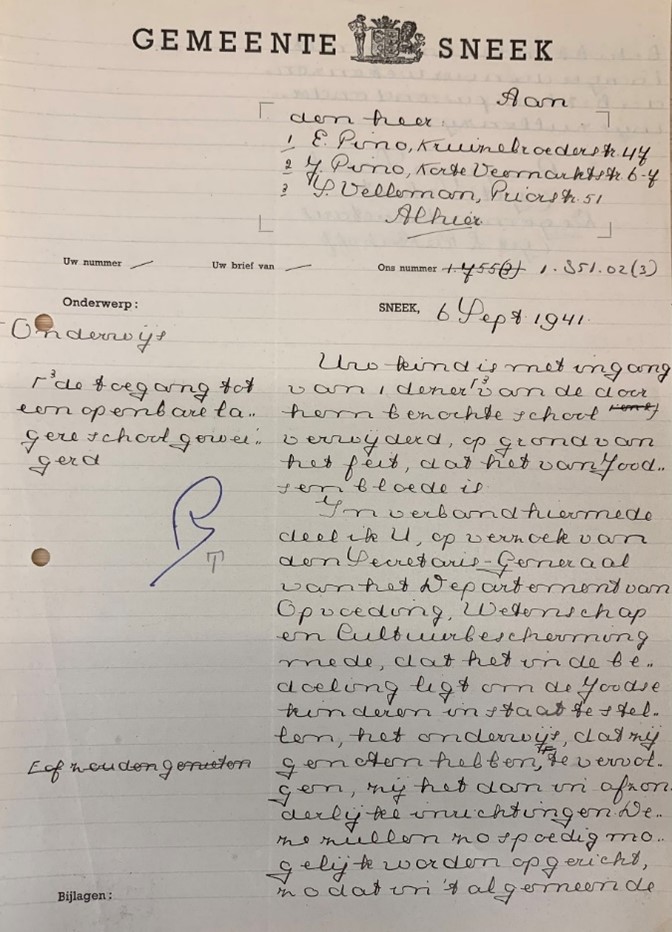
Demnig placed the first stones on April 20, 2009. They were stones that remember Jakob, Erna and Lientje Pino at 7 Korte Veemarktstraat. Jakob and Erna had a café there. On Tuesdays cattle traders came there to transact their business and have a drink. Mechgelien, nicknamed Lientje, was their little daughter. During the first years of the war she attended the Public Elementary School.
The German occupation authorities decided in 1941 that “children of Jewish blood” should be removed from school and educated in special Jewish schools.

Poem Strúkelstienen
Henk van der Veer wrote the poem Strúkelstienen about this Pino family:
der lêge strúkelstienen met fan dy moaie glimmende messingplaatsjes
in’e stoep foar ut kafee fan ut ouwe ferlaten Sneker feemerktterrein
kleine strúkelstienen foar Jakob Pino & syn frou Erna Adler
en ok foar hun dòchterke Mechgelien Pino
in ut fan gòdverlaten Auschwitz liep ut spoar van dizze Pino’s doad
gyn teken van leven mear, laat staan hun naam útbeiteld in stien
der lêge strúkelstienen met fan dy moaie glimmende messingplaatsjes
as un skraal earesalút foar fader Jakob & moeke Erna
en foar dy lieve lieve Lientsje nòch mar elf jaar oud
Information about the other “struikelstenen” can be found at:
The section on the removal of Jewish students from education came about through my own research in the municipal archives located in Cultural History Center “De Tiid” in Bolsward. (Matthijs Graafland)
Henk van der Veer’s poem Strúkelstienen appeared in 2015 in the collection De Dames Pino -en andere fersen over Joadse Snekers.

Three little stones in front of the café (later café Vellinga) keep the memory of this family alive.
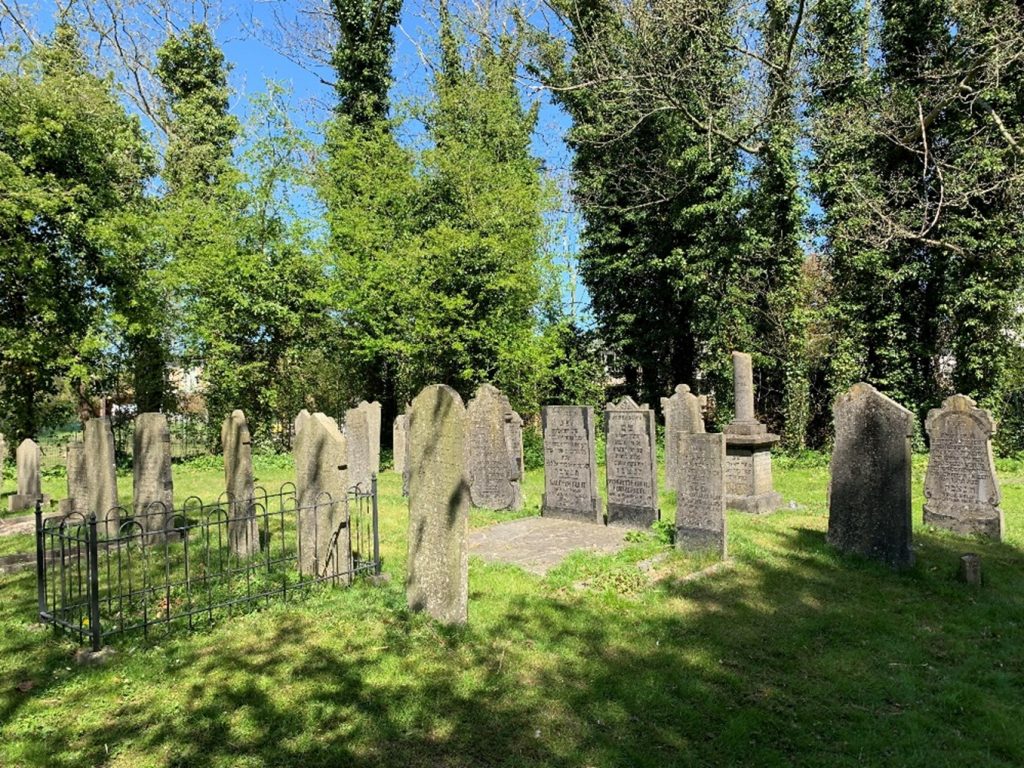
Jewish Cemetery
In 1823, the Jewish community of Sneek had its own cemetery established on the Barrewier. This is a mound that then lay outside the built-up area The cemetery now lies between the buildings on the Leeuwarderweg and the Mayor De Hoopp Park. The cemetery contains 96 grave stonemasons, the oldest dating from 1823. The cemetery is not freely accessible.
Jewish monument next to the cemetery
Visual artist Dirk Hakze designed a monument in memory of the Jewish community in the city of Sneek. Since 2010 it stands next to the entrance to the Jewish cemetery.
Shading creates a Star of David on the floor of the monument. . On the Jewish holiday Yom Kippur, the star is in full proportion. The twelve lines of the shadow represent the twelve tribes of Israel arising from the sons of the patriarch Jacob The thirteen planes created by the lines represent the thirteen main foundations of the Jewish religion, as formulated by the Jewish philosopher and Rabbi Maimonides.
Memorial wall
In the garden of Sneek City Hall is a monument commemorating the Jewish victims of the Second World War in Sneek.
The arched wall was erected in 1995. On it are inscribed the names and dates of birth and death of the perished Jews of Sneek. The places where they were robbed of their lives are also mentioned. An impressive and sad refrain:
Auschwitz -Sobibor-Auschwitz-Sobibor